Saturday, 17 December 2011

Homepage

This page is created in December 2011 as to fulfill the requirement for subject SSG 3162: Technique in Molecular Biology. It is an essential subject for undergraduate of Industrial Biology, Faculty of Bioscience and Bioengineering, University Teknologi Malaysia. This assignment is completed upon the teamwork by Siti Kauthar  Torijan, Siti Aqlima Alias and Siti Amirah Ishak


Siti Kauthar Torijan

Siti Aqlima Alias

Siti Amirah Ishak

DNA

Deoxyribonucleic acid (DNA) is a nucleic acid that contains the genetic instructions used in the development and functioning of all known living organisms except for RNA viruses. The characteristics of all living organisms, including humans, are essentially determined by information contained within DNA that they inherit from their parents.

The molecular structure of DNA can be imagined as a zipper with each tooth represented by one of four letters (A, C, G, or T), and with opposite teeth forming one of two pairs, either A-T or G-C. The letters A, C, G, and T stand for adenine, cytosine, guanine, and thymine was a basic building block of DNA. For example, the sequence GCATT represents different information than the sequence GCAAC in the same way that the word "POTS" has a different meaning from "TOPS" or "SPOT," even though they use the same letters. The traits of a human being are the result of information contained in the DNA code.

Add caption


Living organisms that look different or have different characteristics also have different DNA sequences. The more varied the organisms, the more varied the DNA sequences. DNA fingerprinting is a very quick way to compare the DNA sequences of any two living organisms.

DNA fingerprinting

Conventional fingerprint occurs only on the fingertips and can be altered by surgery. DNA fingerprint is the same for every tissue, and organ of a person and it cannot be altered by any known treatment.
Fingerprinting with ink and paper, based on fingertip ridge patterns is the standard method for personal identification. Finger prints are constant throughout life, finger prints can be used to distinguish one person from any other. Similarly the DNA of every individual is also unique in its own way. The degree of variation in bands from one person to another is so large that the theoretical probability that the bands seen in one individual are present in another unrelated individual may be in millions. The advantages over finger prints are numerous. DNA can be isolated from any part of the body, skin cells, blood or blood stains or semen.
An additional application of DNA fingerprint technology is the diagnosis of inherited disorders in adults, children, and unborn babies. The technology is so powerful that, for example, even the blood-stained clothing of Abraham Lincoln could be analyzed for evidence of a genetic disorder called Marfan's Syndrome. 

Add caption

How Does It Work??

DNA fingerprinting is a laboratory procedure that requires five steps:

1. Isolation of DNA.
DNA must be recovered from the cells or tissues of the body. Only a small amount of tissue such as blood, hair, or skin is needed. For example, the amount of DNA found at the root of one hair is usually sufficient.

2.  Cutting, sizing, and sorting.
Special enzymes called restriction enzymes are used to cut the DNA at specific places. For example, an enzyme called EcoR1, found in bacteria, will cut DNA only when the sequence GAATTC occurs. The DNA pieces are sorted according to size by a sieving technique called electrophoresis. The DNA pieces are passed through an agarose gel. This technique is the biotechnology equivalent of screening sand through progressively finer mesh screens to determine particle sizes.

 3. Transfer of DNA to nylon.
The distribution of DNA pieces is transferred to a nylon sheet by placing the sheet on the gel and soaking them overnight.

4. Probing.
Adding radioactive or colored probes to the nylon sheet produces a pattern called the DNA fingerprint. Each probe typically sticks in only one or two specific places on the nylon sheet.

5. DNA fingerprint.
The final DNA fingerprint is built by using several probes (5-10 or more) simultaneously. It resembles the bar codes used by grocery store scanners. 


Application Of DNA fingerprinting

Paternity and Maternity
A person is inherits his or her variable number tandem repeat (VNTR) from his or her parents, VNTR patterns can be used to establish paternity and maternity. The patterns are so specific that a parental VNTR pattern can be reconstructed even if only the children's VNTR patterns are known (the more children produced, the more reliable the reconstruction). Parent-child VNTR pattern analysis has been used to solve standard father-identification cases as well as more complicated cases of confirming legal nationality and, in instances of adoption, biological parenthood.


Diagnosis of Inherited Disorders

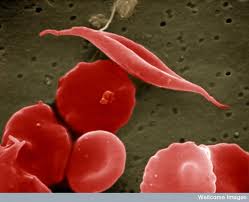
DNA fingerprinting is used to diagnose inherited disorders in both prenatal and newborn babies in hospitals around the world. These disorders may include cystic fibrosis, hemophilia, Huntington's disease, Huntington's horea, Marfan's syndrome Alzheimer's disease (Familial
Type)
, sickle cell anemia, thalassemia, and many others.
Early detection of such disorders enables the medical staff to prepare themselves and the parents for proper treatment of the child. In some programs, genetic counselors use DNA fingerprint information to help prospective parents understand the risk of having an affected child. In other programs, prospective parents use DNA fingerprint information in their decisions concerning affected pregnancies.

Developing Cures for Inherited Disorders

Research programs to locate inherited disorders on the chromosomes depend on the information contained in DNA fingerprints. By studying the DNA fingerprints of relatives who have a history of some particular disorder, or by comparing large groups of people with and without the disorder, it is possible to identify DNA patterns associated with the disease in question. This work is a necessary first step in designing an eventual genetic cure for these disorders.

Biological Evidence

FBI and police labs around the U.S. have begun to use DNA fingerprints to link suspects to biological evidence - blood or semen stains, hair, or items of clothing - found at the scene of a crime. Since 1987, hundreds of cases have been decided with the assistance of DNA fingerprint evidence.
Another important use of DNA fingerprints in the court system is to establish paternity in custody and child support litigation. In these applications, DNA fingerprints bring an unprecedented, nearly perfect accuracy to the determination.


Personal Identification

Since every organ or tissue of an individual contains the same DNA fingerprint, the U.S. armed services have just begun a program to collect DNA fingerprints from all personnel for use later, in case they are needed to identify casualties or persons missing in action. The DNA method will be far superior to the dogtags, dental records, and blood typing strategies currently in use.

References

1. Cristopher L. , and Thomas .p (2006) DNA fingerprinting

2. Pieter V., Rene H. and Marjo B. (1995) AFLP: Anew technique for Dna fingerprinting-Nucleic Acid Research

3. David F. (1994) DNA fingerprinting in human health and society

4. Davidson (2001) Southern Blot Method.